Request A Free Estimate
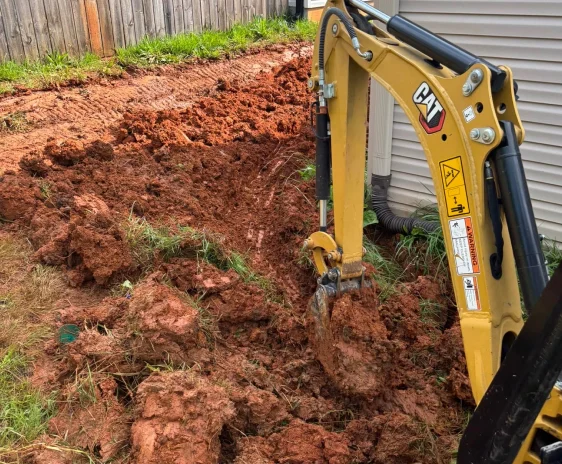
Mistake 1: Skipping Thorough Soil Testing
Many builders and homeowners skip detailed soil analysis before breaking ground, assuming the earth beneath their property is uniform and stable. In Knoxville, where clay-heavy soils sit alongside rocky ridge terrain, this assumption can lead to foundation failure, settling, and costly mid-project redesigns. Soil composition directly affects load-bearing capacity, drainage patterns, and how deeply you need to excavate for a stable foundation.
Without soil testing, you might discover too late that your site requires expensive soil stabilization, deeper footings, or extensive fill material. Clay soils expand and contract with moisture changes, creating movement that cracks slabs and shifts walls. Rocky subsoils can slow excavation dramatically, blowing through your timeline and budget when equipment hits unexpected bedrock.
Proper site preparation services include soil testing before any digging begins. Geotechnical analysis identifies problem areas early, allowing your excavation contractor to adjust grading plans, select appropriate fill materials, and set realistic timelines. Spending a few hundred dollars on soil testing now prevents tens of thousands in structural repairs later. If you’re planning new construction or a major addition, make soil analysis the first step, not an afterthought.
Mistake 2: Ignoring Underground Utilities
Digging without mapping underground utilities is one of the fastest ways to turn a routine excavation into a disaster. Gas lines, water mains, electrical conduits, fiber optic cables, and sewer lines often run beneath residential properties, and striking any of them can cause service outages, injuries, costly repairs, and legal liability. In Knoxville’s older neighborhoods, utility maps may be outdated or incomplete, making on-site location services essential.
A single backhoe bucket through a gas line can evacuate an entire block and result in five-figure fines and repair bills. Severing a fiber optic trunk line can bring six-figure damage claims from service providers. Even hitting a water main floods your excavation, destabilizes surrounding soil, and delays your project for days or weeks while repairs are completed and inspections are passed.
Before any excavation services begin, always call 811 to request utility locates. This free service marks public utilities, though you may still need private locators for lines between the street and your home. A qualified excavation contractor will wait for clearance and use hand-digging or vacuum excavation near marked lines. When you’re planning land clearing or grading projects, factor in time for utility location and never pressure your crew to skip this step. The few days you save are not worth the risk.
Mistake 3: Poor Water Management and Drainage Planning
Failing to plan for water movement is a mistake that compounds over time, turning minor inconveniences into structural nightmares. During excavation, improper grading creates low spots where water pools, saturating soil and undermining foundations. In Knoxville, where spring thunderstorms can drop several inches of rain in a few hours, poor drainage planning can flood basements, erode fresh fill, and create mudslides that damage neighboring properties.
Water follows gravity, and if your grading service doesn’t account for natural flow patterns, you’ll fight drainage problems for the life of the structure. Pooling water around foundations increases hydrostatic pressure, forcing moisture through concrete and creating mold, rot, and settling. Erosion from uncontrolled runoff washes away expensive topsoil and destabilizes slopes, requiring costly regrading and retaining walls.
Proper site preparation includes analyzing existing drainage patterns, installing French drains or swales where needed, and grading away from structures at a minimum two-percent slope. Your excavating contractor should shape the site to channel runoff toward appropriate discharge points, whether that’s a storm drain, retention area, or natural drainage corridor. Don’t assume you can fix drainage after construction; the time to engineer water management is during initial excavation and grading, when moving earth is still straightforward and cost-effective.
Mistake 4: Inadequate Soil Compaction After Fill
Once excavation is complete and fill material is placed, proper compaction is critical to preventing settlement and structural failure. Loose or poorly compacted soil compresses under the weight of buildings, driveways, and landscaping, creating cracks, uneven floors, and gaps that let water infiltrate. In Knoxville’s clay soils, inadequate compaction allows voids to form, and when those voids collapse, they take your foundation with them.
Many builders rush through compaction or skip it entirely, assuming gravity and time will do the work. Instead, uncompacted fill settles unevenly over months or years, causing differential movement that cracks foundations, buckles driveways, and creates drainage problems where none existed before. If you’ve ever seen a sidewalk that’s sunk six inches at one end, you’ve witnessed the result of poor compaction.
Quality site preparation services include compacting fill in thin lifts using plate compactors or rollers, checking density with proper testing equipment, and following engineering specifications for your soil type and intended use. This process takes time and specialized knowledge, which is why working with an experienced excavation contractor matters. Proper compaction isn’t glamorous and it’s hard to see once the work is covered, but it’s the difference between a stable, long-lasting build and one that requires constant repair. If your contractor doesn’t mention compaction testing and lift thickness, ask questions before you approve the work.
Mistake 5: Hiring Based on Price Alone Without Verifying Experience
Skimping on compaction testing is an invisible mistake that shows up months or years later, often after your home is already built. In Knoxville’s varied terrain, where fill dirt composition changes from job to job, proper compaction ensures that soil beneath your foundation, driveway, or patio achieves the density needed to support weight without settling. When contractors rush this step or rely on guesswork instead of measured lifts and mechanical compaction, the fill remains loose and unstable.
The consequences become obvious over time: foundation cracks, uneven floors, sinking driveways, and doors that no longer close properly. In extreme cases, entire sections of a structure can drop several inches, requiring expensive underpinning or total reconstruction. Each lift of fill material must be compacted in thin layers, typically six to eight inches at a time, with moisture content carefully controlled. Skipping lifts or adding too much material at once traps air pockets that collapse under load.
Working with experienced excavation services that understand the science behind compaction is essential. Proper site preparation includes not only placing fill but verifying density through field testing, ensuring your investment rests on solid ground. This attention to detail during excavation prevents the kind of settlement issues that can compromise your entire build and cost tens of thousands to remedy after the fact.